When the Sky Becomes a Business Continuity Risk
Drone activity is becoming a business continuity issue, expanding aerial risk beyond aviation and into infrastructure, insurance, and enterprise resilience.

Summary
As drones become more common in civilian airspace, aerial risk is increasingly intersecting with business continuity, critical infrastructure, and insurance. Airport disruptions, large-event security operations, and emerging insurer analysis demonstrate that drone activity can create significant operational and financial consequences even without physical damage. For businesses and insurers, the evolving challenge is therefore not simply preventing a drone incident, but understanding exposure, reducing uncertainty, and building the awareness, response, and continuity capabilities needed to limit disruption.
Business interruption rarely begins with the interruption itself. It begins with an event that forces an organization to stop, restrict, reroute, evacuate, inspect, or otherwise change normal operations.
For decades, insurers and enterprise risk managers (opens in a new tab) have developed increasingly sophisticated frameworks around the events most likely to produce those outcomes: fire, severe weather, machinery failure, cyber incidents, supply-chain disruption, and other established hazards. The underlying principle is straightforward. The financial consequences of an event are not necessarily proportional to the physical damage it causes.
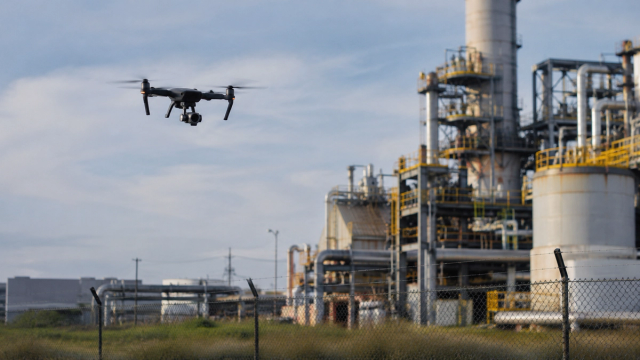
That distinction matters as drones become more common within civilian airspace. The emerging risk is not limited to a drone striking a building, aircraft, transmission line, refinery, or other physical asset. An unidentified or unauthorized aircraft can create an operational problem before anyone knows whether it represents a genuine threat. Airports can restrict flights. Event operators can alter activities. Security teams can establish protective perimeters. Infrastructure operators may need to investigate activity before normal operations continue.
In other words, the business consequence can begin before physical damage occurs. That makes aerial risk increasingly relevant to the broader conversation about business continuity.
Business Interruption Is Often Larger Than the Original Event
The insurance industry already understands the economics of interruption extremely well. In October 2026, Allianz Commercial published an analysis of 7,888 business interruption insurance claims totaling approximately €6.74 billion between 2021 and 2025. The average value of a business interruption claim exceeded €850,000—about 70% higher than the corresponding average property-damage claim in its analysis.
Allianz summarized the underlying lesson succinctly (opens in a new tab): the financial impact of being unable to operate can significantly exceed the cost of repairing the damage that initiated the disruption.
That principle extends beyond the traditional causes represented in historical claims data. Drone incidents can create a similar separation between physical damage and economic consequence. An airport runway closed because of suspected drone activity may suffer no physical damage at all, while airlines, passengers, cargo operators, ground services, hotels, logistics providers, and businesses dependent upon those transportation flows can still experience disruption.
This is not hypothetical. The World Economic Forum's Global Risks Report 2026 (opens in a new tab) specifically notes that airport operations have repeatedly been interrupted by drone activity while examining the growing vulnerability of critical infrastructure. The report places that risk within a broader environment in which infrastructure disruption can propagate into supply chains, essential services, and economic activity.
For risk managers, that suggests an important reframing. Aerial risk should not be evaluated only by asking, "What could a drone physically damage?" It should also include, "What would happen operationally if we could not immediately determine what that drone was doing?"
The Airport Example Shows How Quickly Risk Can Become Operational
Airports offer one of the clearest demonstrations because aviation safety can require action before intent is established.
The 2018 Gatwick disruption (opens in a new tab) remains an instructive example. Reported drone sightings contributed to the airport closing for approximately 36 hours, disrupting more than 1,000 flights and affecting roughly 140,000 passengers. EasyJet subsequently reported approximately £15 million in costs related to lost revenue and passenger care. The relevance today is not the age of the incident but the mechanism of loss. A comparatively small object operating in the wrong place created consequences across an enormously larger transportation system.
More recent events demonstrate another dimension: protective actions themselves must be integrated safely into complex infrastructure.
In February 2026, the FAA announced that operations at El Paso International Airport would be halted for 10 days (opens in a new tab) after a counter-drone laser system was used by U.S. Customs and Border Protection without completion of an FAA safety review. The order was reversed after roughly eight hours following White House intervention. Reuters reported the episode again this month as federal authorities expanded restrictions on unauthorized drone activity along the U.S.-Mexico border.
The incident illustrates a broader continuity principle. Managing aerial risk is not simply a matter of possessing a detection or mitigation capability. Protective systems must coexist with aviation, communications, safety procedures, regulatory requirements, and normal operations. Poorly integrated protection can itself become a source of operational disruption.
FIFA Demonstrated the Scale of the Monitoring Problem
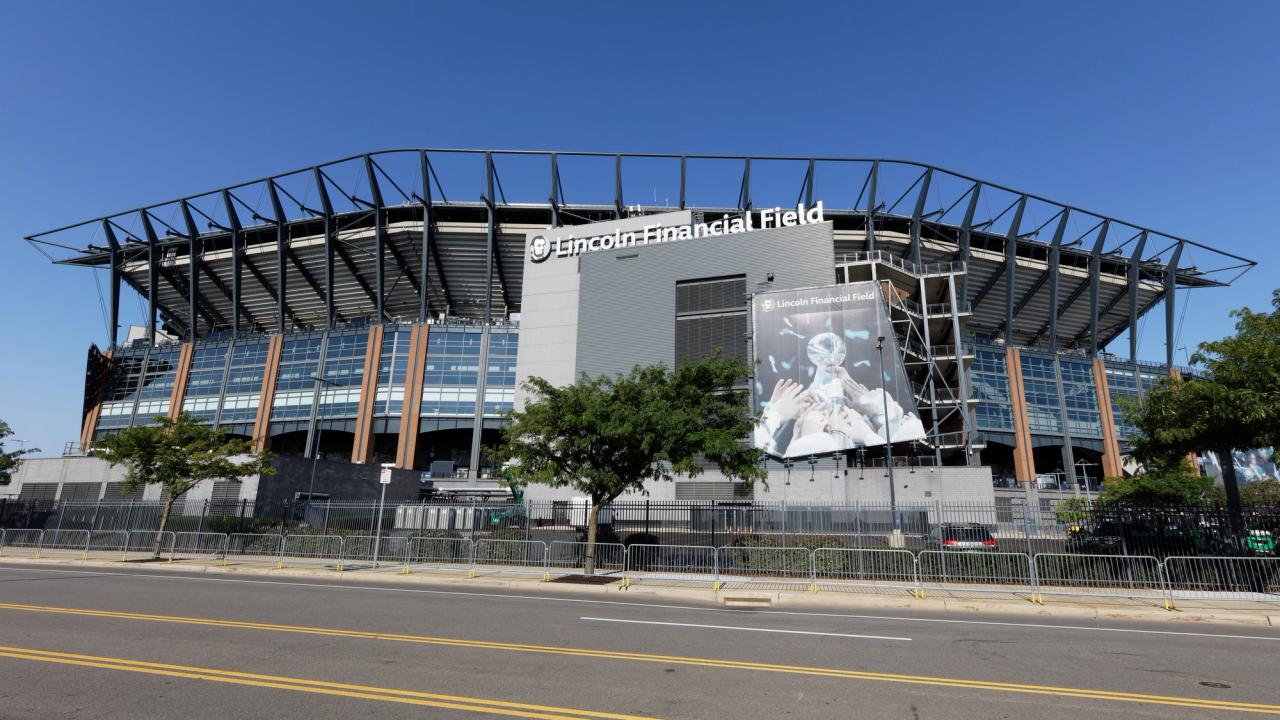
The 2026 FIFA World Cup provided a different kind of evidence. The FAA established nearly 250 temporary flight restrictions (opens in a new tab) covering match venues, fan festivals, team hotels, and training sites. Federal, state, and local partners ultimately seized more than 700 unauthorized drones operating within restricted airspace across the 11 U.S. host cities (opens in a new tab). Ground Intercept Teams were deployed to support detection, mitigation, and enforcement.
The significance for enterprise risk management is not that hundreds of malicious attacks occurred. It is that hundreds of unauthorized aircraft entered airspace that authorities had determined required active protection.
Every unidentified aircraft introduces uncertainty. Operators must determine whether it is authorized or unauthorized, benign or potentially threatening, relevant or irrelevant to the protected environment. At a large event, airport, power facility, logistics hub, refinery, data center, or other critical site, the operational problem is therefore partly one of classification and decision-making.
That creates a risk-management burden even when an incident ultimately proves harmless.
FIFA also demonstrated what mature preparation begins to look like: defined airspace, established authorities, trained personnel, monitoring capabilities, escalation procedures, and coordination among multiple organizations. Those characteristics resemble familiar continuity disciplines much more than an isolated security purchase.
Insurance Is Beginning to Recognize the Broader Exposure
The insurance sector has been tracking drone-related exposure for years, but recent analysis increasingly connects drones to broader systemic risks.
Swiss Re's SONAR 2025 research identified emerging drone risks (opens in a new tab) affecting property and casualty insurance and specifically noted the possibility of supply-chain and business interruption claims, including contingent business interruption. Swiss Re also highlighted an important duality: drones can create new exposures while simultaneously helping insurers inspect infrastructure, assess damage, improve risk evaluation, and accelerate claims processes.
That duality is important. Drones are not inherently a threat category. They are a technology category with beneficial commercial applications and an expanding presence in civilian environments. The insurance question therefore becomes more nuanced than simply determining whether drones are covered.
Insurers and risk managers increasingly need to understand how aerial activity changes the exposure surrounding an insured asset. That could include the proximity of sensitive airspace, concentration of operations, dependence upon uninterrupted access, availability of alternative facilities, response authority, detection capability, and the consequences of an operational shutdown.
The relevant loss scenario may also cross traditional coverage boundaries. Depending upon the event and policy language, consequences could touch property, aviation, liability, cyber, terrorism or political violence, event cancellation, supply-chain exposures, and business interruption. Coverage will vary materially by policy, trigger, jurisdiction, exclusions, and whether physical damage is required.
That makes aerial risk as much a risk-engineering problem as an insurance-product question.
The Important Variable Is Becoming Time
One of the strongest lessons from established business interruption analysis is that loss severity is often driven by duration.
Allianz reports that recovery is becoming longer and more expensive (opens in a new tab) as supply-chain constraints, inflation, labor shortages, and mitigation costs compound initial disruptions. Its October analysis emphasizes robust continuity planning, identification of critical dependencies, contingency arrangements, early detection, and rapid response as important loss-reduction mechanisms.
A similar logic can be applied to aerial risk. Consider two otherwise identical infrastructure sites. One detects an unidentified drone but has no established process for determining what it is, whether it presents a threat, who has authority to respond, or when normal operations can safely resume. The second site has persistent awareness, established escalation procedures, trained personnel, defined coordination channels, and a rehearsed continuity plan.
The drone may be identical. The business interruption may not be.
That distinction could eventually become meaningful to underwriting because mature insurance markets routinely differentiate between exposure and control. Fire risk is evaluated alongside sprinklers, compartmentation, detection, maintenance, and emergency response. Cyber exposure is evaluated alongside monitoring, access controls, backups, incident response, and recovery planning.
Aerial risk may follow a similar trajectory. The question may gradually shift from whether an organization could encounter unauthorized drone activity to how effectively it can detect, assess, manage, and recover from that activity.
Aerial Risk Belongs in Business Continuity Planning
This does not mean every company needs counter-UAS technology. It does mean organizations with concentrated, high-value, safety-sensitive, or continuity-critical operations should begin asking whether low-altitude aerial activity belongs in their risk assessments.
For an airport, utility, refinery, port, logistics hub, large venue, data center, or other critical facility, several questions are increasingly relevant. What operations could be affected by unidentified aerial activity? How quickly would the organization know that something unusual was occurring? Who would assess the situation? Which external authorities would become involved? What operational decisions could follow? How long could the organization tolerate those decisions before financial consequences became material?
These are continuity questions. They also align with a broader change occurring in infrastructure risk. The World Economic Forum argues (opens in a new tab) that monitoring should become a core operational necessity as critical infrastructure becomes more interconnected and exposed to cyber-physical disruption. Visibility helps organizations determine what is happening, respond effectively, recover faster, and strengthen defenses.
The same principle applies to the air immediately surrounding critical assets. Preparedness begins with knowing what is there.
From Security Expense to Resilience Investment
Risk controls often change category as a threat matures. Cybersecurity was once frequently treated as a specialized IT expense. Today, cyber resilience is routinely discussed at the board, insurance, operational, regulatory, and enterprise-risk levels because organizations learned that a digital incident can become an operational event.
Drone risk may be moving through an earlier version of the same transition.
The Allianz Risk Barometer 2026 still ranks business interruption and supply-chain disruption as the world's third-largest corporate concern. Allianz also emphasizes that business interruption (opens in a new tab) is frequently a consequence of other risks rather than a standalone peril.
That observation is particularly relevant to drones. A drone is not itself "business interruption." It is one possible catalyst for a chain of operational decisions and consequences.
As aerial activity grows, organizations may therefore find greater value in treating aerial awareness as part of a layered resilience strategy: understanding normal activity, identifying anomalies, establishing response protocols, coordinating with appropriate authorities, and designing continuity plans around the possibility that airspace conditions could affect operations.
The objective is not to eliminate uncertainty from the sky. It is to prevent uncertainty from unnecessarily becoming downtime.
Conclusion
Insurance has always evolved alongside changing patterns of risk. New technologies create new exposures, but they also change how established risks such as liability, property damage, supply-chain disruption, and business interruption manifest.
Drones are increasingly doing both.
The most consequential aerial event for a business may not be a dramatic attack. It may be an unidentified aircraft that forces an airport to stop flights, a facility to alter operations, an event organizer to interrupt activities, or a security team to make decisions without enough information.
For insurers, that raises questions about exposure, accumulation, loss triggers, continuity, and the effectiveness of risk controls. For businesses, it raises an even more immediate question: if something unexpected enters the airspace around a critical operation, how quickly can the organization understand what is happening and continue operating safely?
The companies best prepared for a changing sky may ultimately be those that recognize aerial awareness not simply as security infrastructure, but as part of business resilience.

Stephanie N. BlahutVP of Marketing
Stephanie N. Blahut is a growth marketing leader at Umbrella Aerospace, where she leads brand strategy, market positioning, and go-to-market initiatives. She writes about the evolving counter-UAS landscape and the market forces shaping the future of drone defense.